

FMM and HELP University Explore Strategic Industry–Academia Collaboration
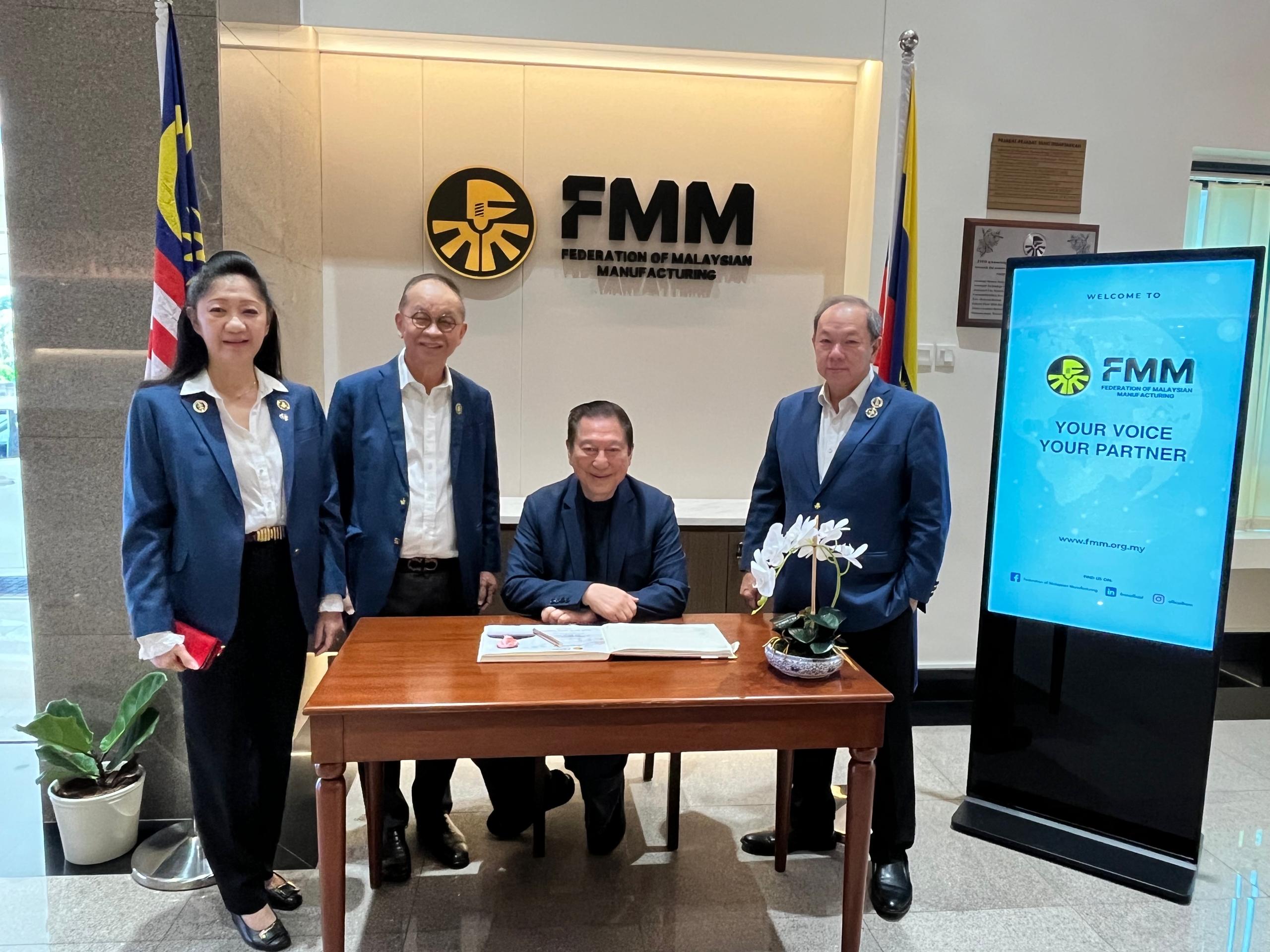
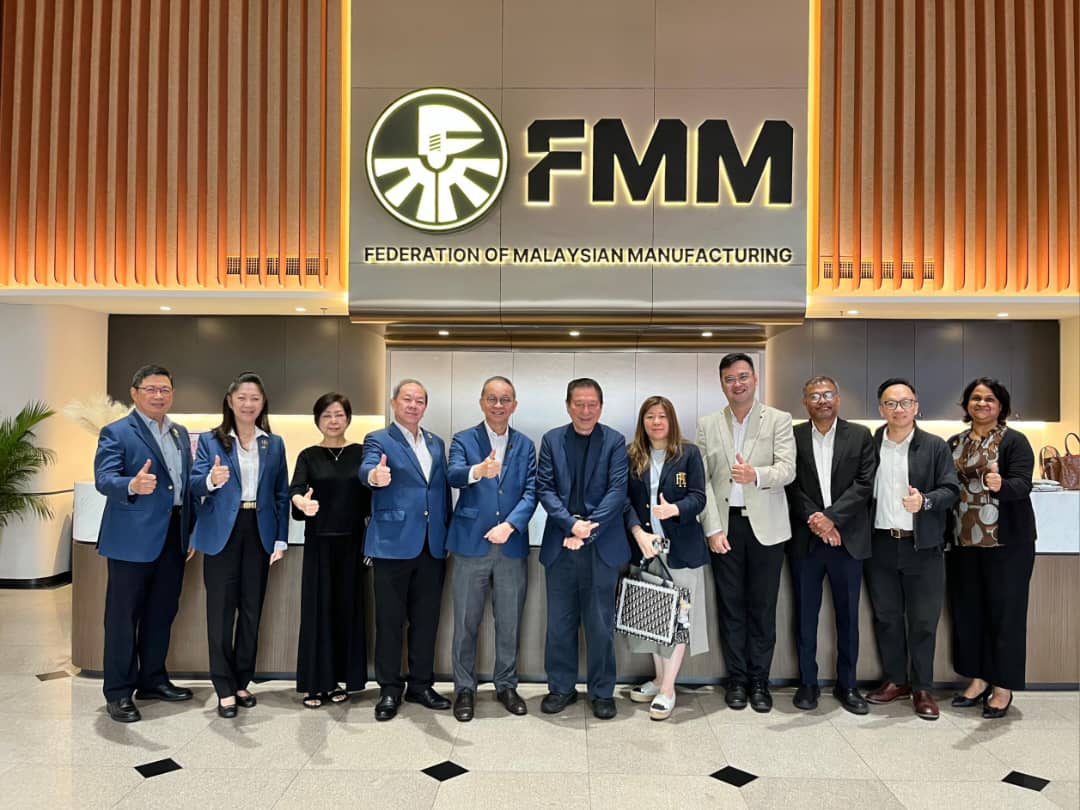
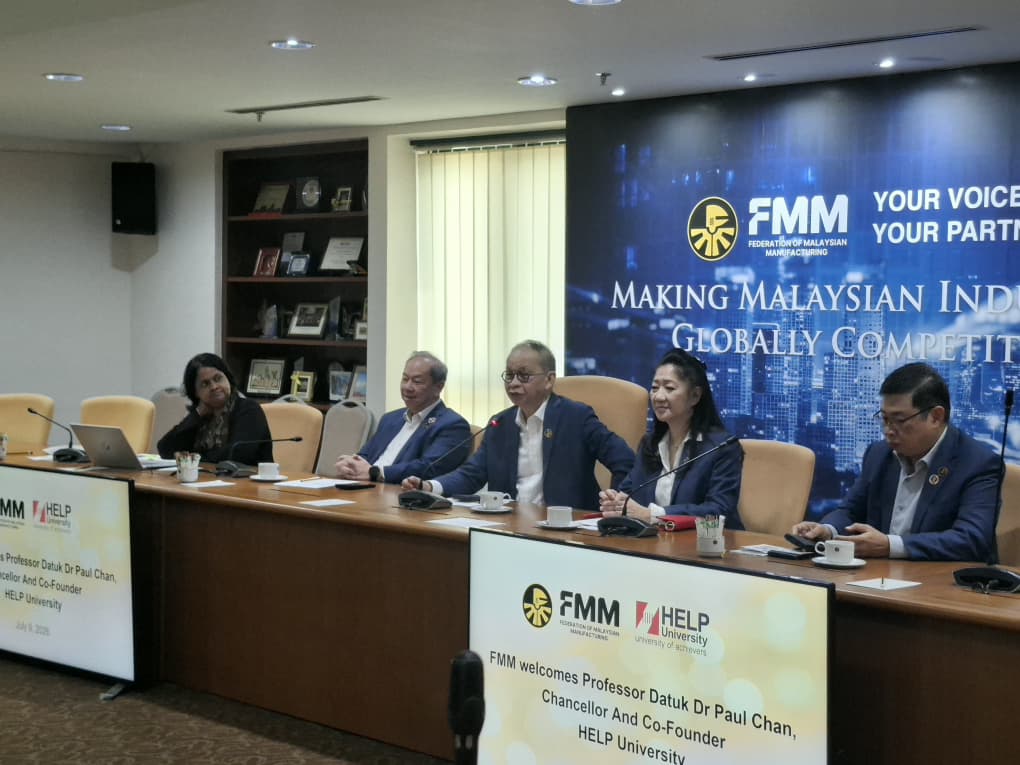
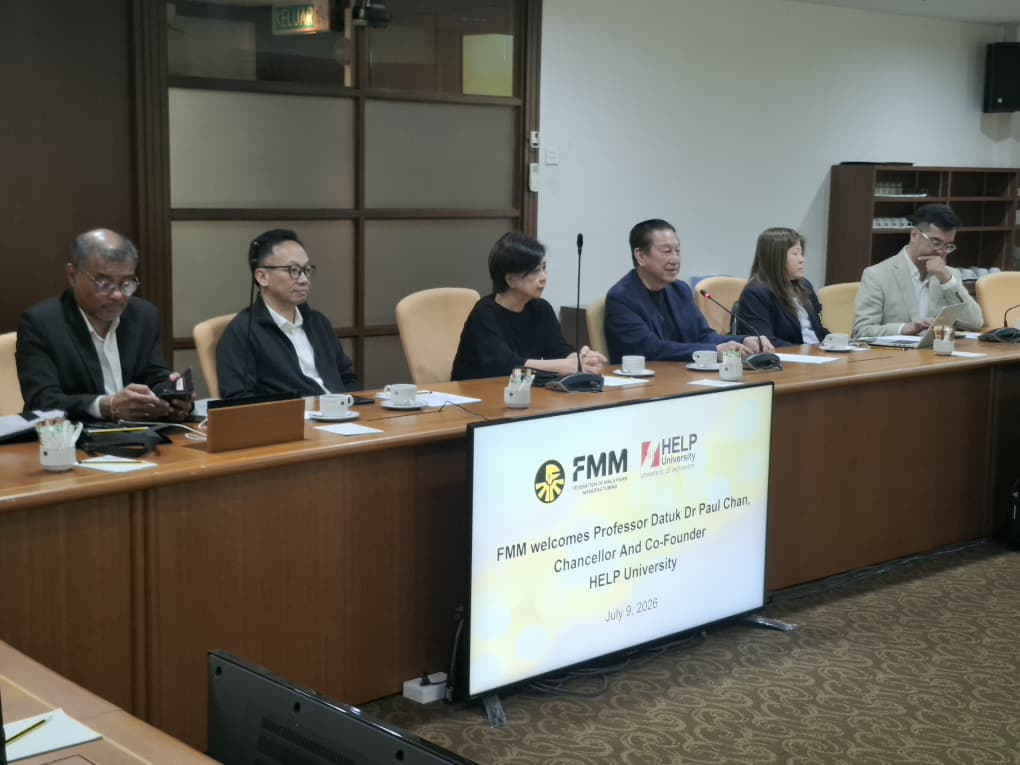
The discussion explored opportunities
for collaboration aligned with FMM’s four strategic pillars. These included
joint research and policy inputs on issues affecting manufacturers; technology adoption
in artificial intelligence, smart manufacturing, automation, robotics and
cybersecurity; market expansion and international business; and
industry-relevant talent and leadership development.
FMM highlighted the importance of strengthening public policy education and research so that future policymakers better understand the impact of government policies on businesses and industries. Both parties also discussed the value of industry-based projects, factory visits, internships and experiential learning to ensure that academic programmes remain relevant to employers’ needs.
HELP University shared its work in executive and postgraduate education, technology management, energy management, packaging technology, industrial biotechnology and the Accreditation of Prior Experiential Learning for Qualifications, or APEL.Q. Particular emphasis was placed on developing shorter, practical programmes to support the upskilling and reskilling of SME leaders, engineers and experienced employees for the AI-driven economy.
The meeting also covered the impact of geopolitical uncertainty on energy, logistics, food security and supply chains; Malaysia’s need to strengthen its talent development and retention policies; workplace well-being; cybersecurity and compliance; and the importance of scenario analysis to help businesses prepare for an increasingly uncertain operating environment. Opportunities to strengthen manufacturers’ understanding of China’s business, legal, tax, financial and regulatory environment were also discussed.
As a way forward, FMM and HELP University agreed to explore the establishment of a small steering committee to identify and prioritise several practical areas of collaboration, including leadership development, AI and digital transformation, manufacturing research, talent development, workplace well-being, public policy, governance and compliance.
Our Services
News & Events
Helpful Resources
Contact Information
- webmaster@fmm.org.my
- +603-62867200
-
No.3 Persiaran Dagang, PJU 9,
Bandar Sri Damansara,
52200 Kuala Lumpur

Certified to IS0 9001:2015
Certificate No: QMS 00787
Certified to IS0 37001:2016
Certificate No: ABMS 00295